
“Awakening our soul senses is less about becoming ‘psychic’ and more about becoming profoundly perceptive. It is the quiet, steady work of clearing our somatic static so we can notice what arises, regulate enough to listen clearly, and find the courage to trust what whispers within.”

Hiya Traveller,
If you have been with me for a while, you might remember when this space first opened in early 2024 with a quiet update following Cyclone Jasper, which crashed into my town on my birthday. Back then, my creative voice was finding its way through imagery, patterns, and raw energy rather than words. Then came a long, silent stretch—more than a year’s break through 2025 where my writing lay in the "In-Between".
It wasn’t until January 2026, when I published A Baseline Shift, that I finally felt a steady ground beneath my feet and began finding my rhythm. I was learning to shift from the hyper-vigilant nervous system loop of "What if?" to the grounded observation of "What is".
Today, this article is a personal manifesto—a map of how I know what I know when I read your Tarot cards and tune into your energy, and a heartfelt invitation for you to awaken your own dormant, intuitive faculties. Experiences we sometimes describe as “extrasensory” may intersect with processes we're beginning to understand through physiology and cognitive science, while other proposed explanations—including quantum models of consciousness—remain highly theoretical. Unlocking these channels has been my life's work.
As many of you know, I am a neurodivergent traveler. Navigating a late ADHD diagnosis, committing to therapy, and finding my path through a Bachelor of Psychological Science—where I recently achieved High Distinctions in statistics—have been the defining chapters of my healing journey. It was through this unique blend of academic rigor, personal neurodivergence, and somatic practice that I became a qualified partner with the HeartMath Institute. My own healing is a non-negotiable part of this work. It is how I continuously clean my mirror so that what I reflect to you is pure, sovereign, and aligned.
So, let's step beyond the reduction valve of our five senses and explore the vast, multidimensional spectrum of the soul's perception. But first, I must remind you to Keep True… to you!
A Note on Discernment:
Throughout this exploration, I invite you to hold curiosity and critical thinking together. Not every feeling is intuition, not every thought is guidance, and not every coincidence needs to become a sign. Our perceptions are shaped by our nervous systems, memories, expectations, emotions, beliefs and experiences—as well as processes we may not yet fully understand. For me, developing the Soul Senses isn't about believing everything I perceive; it's about becoming familiar enough with my own inner language to notice what arises, regulate before interpreting it, remain curious about alternative explanations, and learn over time what deserves my trust.We don't have to choose between wonder and discernment. We can practise both.

The Expanded Sensory Gate
Clairvoyance, Clairaudience, Clairalience, Clairgustance, and Clairtangency
In psychic literature, our spiritual gifts are described as the "clair" senses. Clairvoyance is clear seeing through the "mind's eye"; Clairaudience is clear hearing of internal guidance distinct from our default inner narrator; Clairalience and Clairgustance represent clear smelling and tasting; while Clairtangency (or psychometry) is the ability to read the history or energy of an object through touch.
Modern sensory science has moved well beyond Aristotle’s familiar five senses. Depending on how sensory systems are defined and classified, researchers recognise a much broader range of ways the nervous system gathers information. Some contemporary accounts identify dozens of distinct sensory processes, although there is no universally accepted count.
Some of these additional senses include:
Equilibrioception: Our sense of balance and spatial orientation.
Proprioception: Our sense of the position and movement of our body and limbs in space.
Interoception: Our perception of signals arising from within the body, such as heartbeat, breathing, hunger and other internal states.
Chronosception: Our perception and experience of the passing of time. Later in this article, I’ll also explore this through the ancient distinction between Chronos—measurable, sequential time—and Kairos—the subjective experience of the opportune or meaningful moment.
Historically, ancient Egyptian, Greek, and Chinese cultures held a "cardiocentric" view, believing that the heart—connected to the body by the blood vessels—was the seat of perception, soul, and intellect. In Egypt, the "Book of the Dead" detailed the mouth-opening ritual where priests touched the sensory organs of the deceased to restore their senses, while leaving the heart as the sole organ in the mummified body. In Greek antiquity, Empedocles, Democritus, and Aristotle located thinking in the heart, connected via blood vessels. This cardiocentric hypothesis was opposed by Pythagoras, Plato, and Hippocrates, the latter writing in "De Morbo Sacro" that the brain is the most powerful organ, leading to Galen's "cephalocentric hypothesis". In China, the "Huangdi Neijing" described how the heart controls and interprets perception, with Xunzi writing that the heart possesses an overall understanding to correctly interpret forms and sounds.
Yet, today we understand that the brain acts as what Aldous Huxley and neuroscientist Dr. Tara Swart call a "reduction valve". It filters out 99.9% of the electromagnetic spectrum so we do not drown in sensory data, allowing us to survive on this physical plane.
When we awaken our "clair" senses, we are not adding something "supernatural" to our biology; we are simply loosening this biological reduction valve. Under the model of shared trait vulnerability in neuroaesthetics, highly creative and neurodivergent minds naturally possess attenuated latent inhibition (or low latent inhibition)—a naturally porous sensory filter that lets in more "unseen" raw data. Without grounding, this causes sensory overload and psychological distress. With therapy, self-acceptance, and somatic boundaries, it becomes a structured, extraordinary gift.
How to Develop this Ability:
Our developmental path follows the story of the Tarot, starting with the mind and working down through the elements to fully integrate our gifts into physical reality.
Swords (Air) — Metacognition (De-habituation & The Art of Noticing): We fail to perceive signs because of habituation—our brain filters out the familiar to save energy. Practice The Art of Noticing or Novelty Tracking. Take a completely different route on your daily walk and consciously spot three micro-details you've never registered before. This primes your Reticular Activating System (RAS) to register intuitive symbols.
Cups (Water) — HeartMath Coherence (Heart-Focused Breathing® Technique): To quiet the autonomic "static" of survival threat, we must manage our personal energy. HeartMath’s definition of resilience is the capacity to prepare for, recover from, and adapt in the face of stress, challenge, or adversity. We can think of this capacity as our inner battery. Learning and applying coherence techniques increases our energy reserves and plugs energy leaks. Generating physiological coherence—an optimal state where the heart, mind, and emotions are aligned and in sync—recharges your inner battery, creating a more regulated physiological state from which we may be better able to notice and reflect on the information arising within us.
The Practice: Practice Heart-Focused Breathing® to neutralise emotional reactions, reduce stress, and plug energy drains in the moment:
Step 1: Focus your attention in the area of the heart.
Step 2: Imagine your breath is flowing in and out of your heart or chest area, breathing a little slower and deeper than usual.
Step 3: Find an easy rhythm that's comfortable.
Resilience Application: Establish regular practices to Prep before entering client sessions or reading cards (creating a coherent state of ease, calm, or confidence), and to Shift and Reset in-the-moment when sensory information feels overwhelming, helping you Sustain your energetic baseline throughout the day.
Download my free Heart-Focused Breathing Companion Guide to establish your baseline today.
Wands (Fire) — Somatic Release (Vocal "Hung Song"): Muscular bracing from chronic stress restricts blood flow to your sensory organs. Practice the nasal vocal toning of "Hung Song". By making a nasal "Nggg" hum, you stimulate facial tissues and dramatically increase nitric oxide (NO) production, which acts as a powerful vasodilator to open up receptive sensory channels.
Pentacles (Earth) — Grounding (Sensory Forest Bathing / Shinrin-yoku): Immerse yourself in nature without digital devices. Allow your eyes to settle into a soft, non-focused gaze. This simple practice calms the nervous system, while the retina's specialized time-sensing cells process the light-dark cycle to regulate your circadian rhythms.
Need a guide?
If your sensory filters are porous, and you find yourself constantly overwhelmed by the noise of the world, you do not have to navigate this sensitivity alone. Let’s quiet the somatic static and build a resilient inner battery together. I invite you to book a Complimentary Coherence Call where we can practice this baseline breath together in real-time. Or, if you are ready to deeply commit to your sovereign baseline, explore my 1:1 Personal Mentoring Journey—a 5-week structured program where I guide you step-by-step to tame, maintain, and master your unique nervous system, available online or in person at my rainforest sanctuary, The Portal Place in Kuranda.

The Metacognitive Compass
Claircognizance
Claircognizance is often described as a sudden, clear sense of knowing—an un-deliberated impression that arrives in conscious awareness without an obvious logical trail of breadcrumbs. You simply know, but you may not know how you know.
Cognitive psychology offers one fascinating lens through which we might understand at least some experiences like this: rapid, intuitive reasoning. Research in dual-process reasoning by Bence Bago and Wim De Neys suggests that our fast, intuitive processing is not necessarily a lazy or purely emotional guess. Under some conditions, people can detect logical information rapidly and intuitively, before slower, deliberate reasoning is fully engaged.
When thoughts or answers arise easily, they can also produce a metacognitive experience sometimes described as a “Feeling of Rightness” (FOR). Valerie Thompson’s work on metacognitive reasoning explores how this feeling can influence our confidence in an initial answer and whether we feel the need to engage in further, more effortful analysis. Importantly, a Feeling of Rightness is not a guarantee that an impression is correct—it tells us something about our subjective confidence in what has arisen, not necessarily its objective truth.
This gives us one possible psychological lens through which to consider some experiences described as claircognizance: information may sometimes be processed rapidly and outside conscious awareness before arriving as an apparently immediate “knowing.” Whether this explains every experience people describe as claircognizance is another question—and one I’m happy to leave open.
Furthermore, research by Kerem Oktar and Tania Lombrozo offers another interesting piece of the puzzle: people often associate intuitive decision-making with authenticity and the “true self.” We may favour deliberation for some decisions while believing that deeply personal choices—such as those involving relationships, identity or life direction—should come more intuitively. This may help explain why an intuitive sense of knowing can feel not only convincing, but deeply ours.
How to Develop this Ability:
Our developmental path follows the story of the Tarot, starting with the mind and working down through the elements to fully integrate our gifts into physical reality.
Swords (Air) — Metacognition (Tracking Your Feeling of Rightness): Keep an Intuitive Fluency Log. When faced with a daily decision, write down your immediate intuitive response and rate your subjective Feeling of Rightness from 1 (completely guessing) to 7 (absolute, calm certainty) before you allow your analytical mind to weigh the pros and cons. Notice how your highest-FOR intuitive decisions naturally align with your deepest, authentic path.
Cups (Water) — HeartMath Coherence (Freeze-Frame® Technique): When faced with a sudden decision or a loop of hyper-rational overthinking, we must step out of the stress response. Practicing the Freeze-Frame Technique helps you access your intuitive intelligence and create more objectivity, which can help you find more effective solutions, resolve problems, and enhance your creativity. It stops your "stress movie" in-the-moment so you can edit the frame and create a different, coherent outcome.
The Practice: Practice Freeze-Frame® to balance your mind and emotions and make better choices:
Step 1: Acknowledge the problem or issue and any attitudes or feelings about it.
Step 2: Focus your attention in the area of the heart. Imagine your breath is flowing in and out of your heart or chest area, breathing a little slower and deeper than usual. Find an easy rhythm that’s comfortable.
Step 3: As you continue heart-focused breathing, make a sincere attempt to experience a regenerative feeling such as appreciation or care for someone or something in your life.
Step 4: From this more objective place, ask yourself what would be a more efficient or effective attitude, action, or solution.
Step 5: Quietly observe any subtle changes in perceptions, attitudes, or feelings. Commit to sustaining beneficial attitude shifts and acting on new insights.
Download my free Freeze-Frame Metacognitive Exercise Handout here to align your choices with your true self.
Wands (Fire) — Somatic Release (Fascial Softening): Hyper-rationalism and "overthinking" manifest as physical holding patterns in our connective tissue (fascia). Restorative somatic movements or long-hold stretches quiet the "static" of an overstimulated brain. By melting physical blockages, you reduce systemic inflammation (dysbiosis) and restore homeostasis, clearing the physical "noise" so you can read your metacognitive signals.
Pentacles (Earth) — Grounding (Temporal De-escalation): Pentacles (Earth) — Grounding (Temporal De-escalation): Experiment with stepping away from objective clock-time (Chronos) and allowing yourself, where practical, to spend some time guided more by internal timing (Kairos). Eat when hungry, rest when tired, wander without an agenda, and notice what happens when the pressure of the clock softens. Rather than trying to produce a particular state or intuitive insight, simply observe what becomes easier to notice when you create more spaciousness for your own internal rhythms.
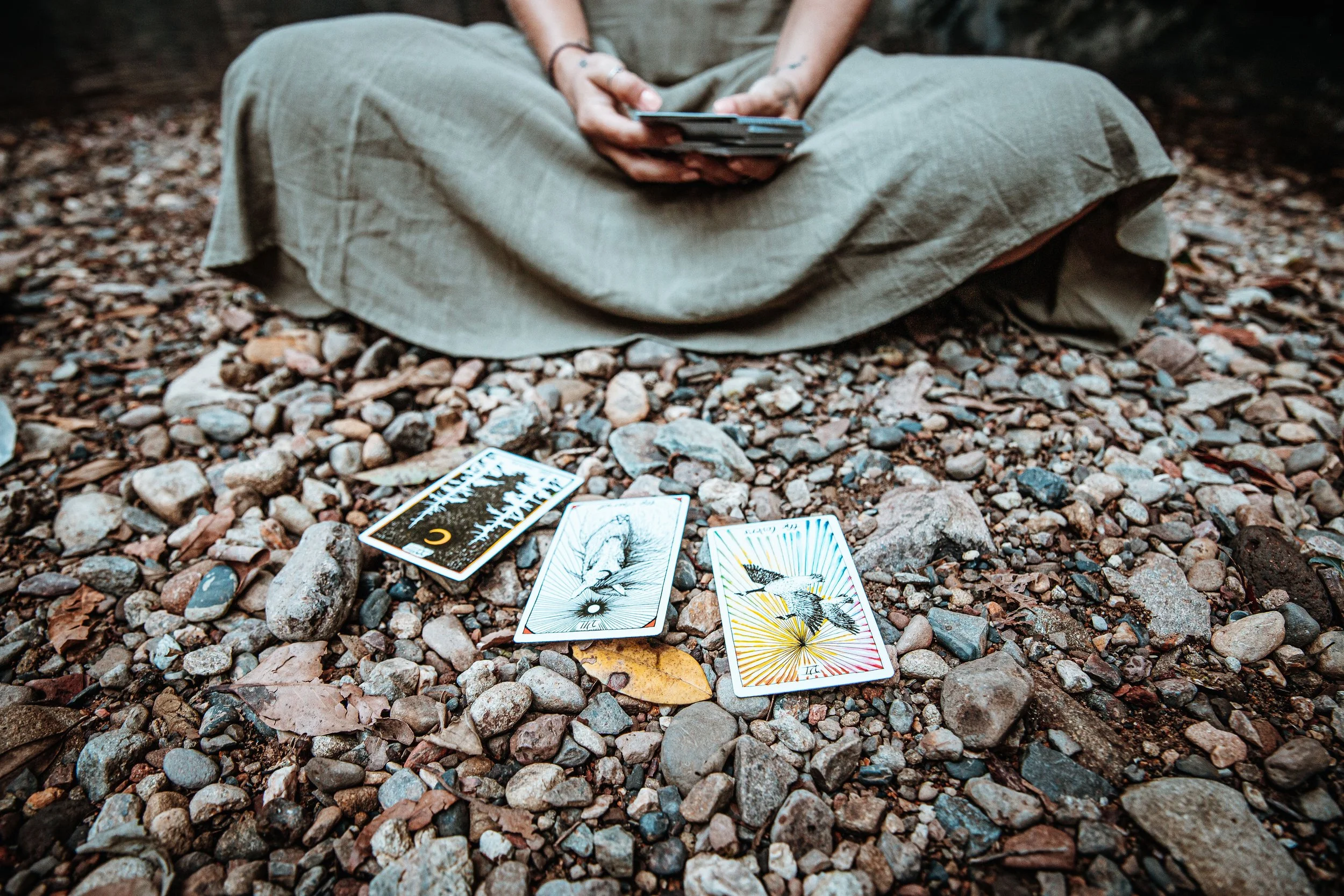
“I don’t always know how I know. But I have spent a lifetime learning to clean my own mirror—becoming a student of my body’s subtle markers so I can distinguish the frantic bracing of past survival from the expansive, coherent truth of my heart.”
The Resonant Field
Telepathy, Nonlocal Consciousness and Extraordinary Clairvoyance
When a reader experiences a sudden mind-to-mind connection (telepathy) or perceives an event distant in space or time (extraordinary clairvoyance), classical materialism dismisses it because no physical, local signal (like a sound wave) traveled between them.
To bridge this, psychiatrists Yakov Shapiro and Terry Marks-Tarlow propose the model of Nonlocal Neurodynamics. Grounded in complexity science and quantum biology, this framework views the human body/brain/mind system as a unitary quantum-classical system. At a subatomic scale, quantum entanglement allows particles to maintain instantaneous correlations across vast distances, bypassing physical barriers entirely.
This matches the Orch-OR theory developed by Sir Roger Penrose and Stuart Hameroff, which suggests that quantum coherence occurs within the brain's microtubules—the tiny structural scaffolding within our neurons. These microtubules act as the brain's "quantum antennas," allowing our individual minds to resonant-couple with a non-local consciousness field. Here is where the science becomes speculative—and where I personally become very curious.
Philosophically, this aligns with Carl Jung’s concept of the unus mundus (the psychophysical unity of mind and matter) and Andrea Tallarico's Theory of Psychic Quanta. Tallarico proposes that consciousness is not a biological byproduct of neural complexity, but a fundamental, non-local universal field ($Ψ\text{-field}$). The brain does not produce consciousness; it acts as a dynamic bidirectional receiver-transducer (a biophysical interface) that temporarily stabilises and modulates these informational "psychic quanta". When we experience telepathy or read energy, our brain's quantum antennas are simply entangling with the non-local field.
How to Develop this Ability:
Our developmental path follows the story of the Tarot, starting with the mind and working down through the elements to fully integrate our gifts into physical reality.
Swords (Air) — Metacognition (Shamanic Theta-Wave Journeying): Shamanic group journeying utilises rhythmic drumming in the theta-wave range (4–7 Hz) to temporarily quiet the brain's Default Mode Network (DMN), which maintains the illusion of a separate self. Hold a shared, loving intention and allow the rhythmic beat to open your subconscious. Afterward, immediately translate your symbolic visual experiences onto a Mind Map (using a combined Mind Map / Heart Map approach) to bypass analytical editing.
Cups (Water) — HeartMath Coherence (Heart Lock-In® Technique): Shifting into and sustaining coherent heart rhythms for a longer period of time can regenerate your mental, emotional, and physical systems and help you recharge and accumulate energy. This makes it a powerful method for helping you shift your baseline to create beneficial and sustained changes at the physiological level, which is imperative for building a new baseline of resilience. Activating and sustaining coherence trains the nervous system to a new “normal” where calm, composure, confidence, and patience become the new baseline.
The Practice: Practice the Heart Lock-In® Technique to build your resilience and connect deeply with the resonance of the field:
Step 1: Focus your attention in the area of the heart. Imagine your breath is flowing in and out of your heart or chest area, breathing a little slower and deeper than usual. Find an easy rhythm that’s comfortable.
Step 2: Activate and sustain a regenerative feeling such as appreciation, care, or compassion.
Step 3: Radiate that renewing feeling to yourself and others to establish a deeper heart connection.
Access the Heart Lock-In Group Resonance Handout to practice aligning with the shared field.
Wands (Fire) — Somatic Release (Movement & Shaking): Use rhythmic drumming, dancing, or full-body shaking as a way of moving physical tension and pent-up energy through the body. Rather than needing to explain the experience through a particular cellular or quantum mechanism, notice what changes in your breathing, muscle tension, emotional state and bodily awareness as you move. Sometimes changing the state of the body can change what becomes available to our awareness. There is always time for a boogie break!
Pentacles (Earth) — Grounding (Earthing / Geodynamo Connection): The Earth's core conducts electrical currents to cast an all-encompassing magnetic field (the geodynamo). Stand barefoot directly on the grass, soil, or wet sand. Direct physical contact couples your body's electrical potential with the Earth’s field, calming your nervous system, reducing parietal lobe boundaries of "self vs. other," and facilitating spontaneous synchronicities.
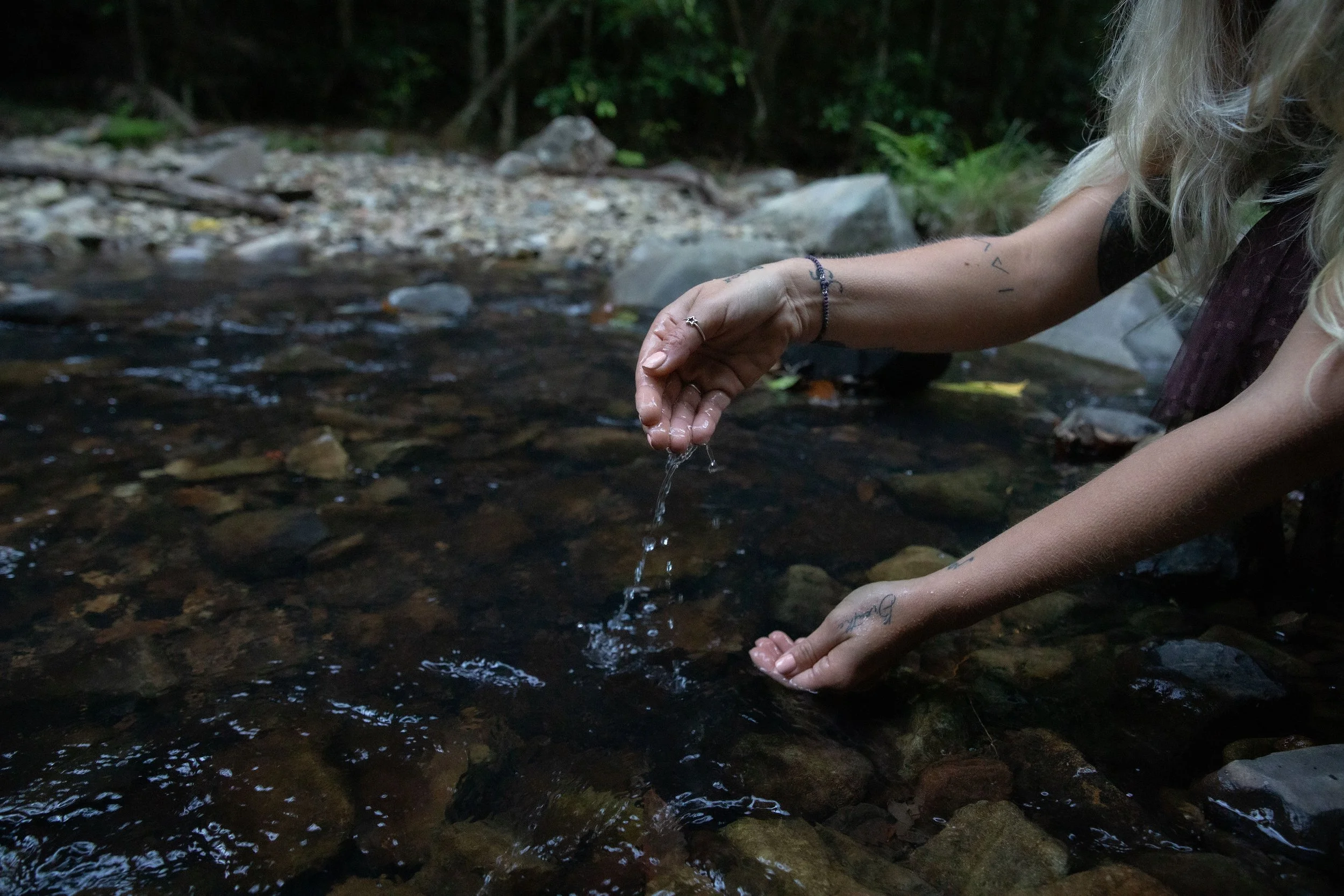
The Somatic Vessel
Clairsentience and Clairkinesthesia
Clairsentients and empaths are individuals who physically soak up the emotional, energetic, and biological states of those around them. Clairkinesthesia is the clear sensing of physical movements or energetic shifts within your own body.
Neurophysiologically, this is the hyper-sensitisation of our Interoceptive system—our eighth sensory system that monitors the internal state of our physiological organs (heart rate, gut tension, muscular bracing). Antonio Damasio’s "Somatic Marker Hypothesis" reveals that our brains utilise these subtle bodily changes as a crucial survival compass. The anterior insula-cingulate system integrates these interoceptive signals with emotional salience, generating our subjective capacity for empathy and self-awareness.
However, when a clairsentient is constantly absorbing the emotional static of others, their body enters a state of chronic defense. Under the serotonin hypothesis of somatic trauma, physical "bracing patterns" and emotional stress are physically stored in our connective tissue (the fascia), which restricts local capillaries and alters the flow of neurotransmitters.
Our ancestors deeply understood this connection. In ancient Greek burials, mourners did not quietly repress their grief. They explicitly wailed, beat their chests, and engaged in deep, rhythmic movements to physically discharge trauma from their muscle tissue before it could crystallise into chronic blockages.
How to Develop this Ability:
Our developmental path follows the story of the Tarot, starting with the mind and working down through the elements to fully integrate our gifts into physical reality.
Swords (Air) — Metacognition (Interoceptive Somatic Tracking): When faced with a challenging personal scenario, close your eyes and turn your attention entirely inward. Scan your internal landscape. Track changes in your heart rate, stomach tension, breathing patterns, or skin temperature. Learn to differentiate between the protective, cortisol-driven contraction of past trauma and the expansive, coherent guidance of your authentic self.
Cups (Water) — HeartMath Coherence (Attitude Breathing® Technique): Feelings, emotions, and attitudes are malleable and can be changed. The Attitude Breathing Technique is a coherence technique for emotional self-regulation that helps to instate replacement attitudes and feelings that are more effective and save energy. With practice, you can use it any time you are experiencing a depleting, energy-draining attitude or feeling and then shift, in the moment with eyes open, to an uplifting or renewing attitude.
The Practice: Practice Attitude Breathing® to shift recurring, depleting attitudes or to prep before an upcoming situation:
Step 1: Recognise the feeling or attitude you want to change (such as being stressed, overwhelmed, or confused) and identify a renewing replacement attitude (such as calm, ease, peace, or clarity).
Step 2: Focus your attention in the area of the heart. Imagine your breath is flowing in and out of your heart or chest area, breathing a little slower and deeper than usual. Find an easy rhythm that’s comfortable.
Step 3: As you continue heart-focused breathing, practice breathing in and increasing the feeling of your new replacement attitude.
Step 4: Practice maintaining your new attitudes and perceptions as you move through your day-to-day interactions.
Grab my Somatic Empath Prep & Reset Protocol and Attitude Breathing Handout to protect and balance your vessel.
Wands (Fire) — Somatic Release (Active "De-bracing" & Somatic Discharging): Empaths must continuously clear their vessel to avoid burnout. Practice active somatic discharging. Use unstructured dancing, rhythmic shaking, or throat-vibrating nasal humming to physically shake absorbed tension out of your fascia.
Pentacles (Earth) — Grounding (The "Medicine Wheel" Earth Lay): Lay flat on your back directly on the Earth with your feet pointing outward. Combine this with a simple cleansing ritual, such as burning sage, which induces olfactory relaxation. Laying flat allows your entire skeletal and fascial system to yield to gravity, aligning your heart-brain coherence with the planetary field and clearing the emotional "static" you've absorbed.

An Invitation to Awaken Your Soul Senses
When I sit across from you at The Portal Place in the heart of the Kuranda rainforest, placing the pieces of your Tarot reading on the table, many of these ways of sensing seem to come together at once. The cards become a beautiful, tactile and symbolic anchor. I notice the imagery and patterns in front of me, sensations in my body, spontaneous associations, words, memories and feelings that arise—and sometimes, something simply arrives as a knowing.
Some of this I can understand through what I am learning about perception, pattern recognition, interoception, implicit learning and the remarkable ways our brains make meaning from information. Other moments are harder for me to explain. Perhaps some of the emerging theories we've explored here will eventually help us understand more about those experiences. For now, I am becoming increasingly comfortable leaving that space open.
What I do know is that these experiences have become clearer as I have become more practised at listening to myself. Meditation, somatic awareness, Tarot, journalling, HeartMath and nervous-system regulation have helped me recognise my own patterns, regulate before interpreting what I sense, and become more discerning about what deserves my attention and trust.
Perhaps discernment is itself one of the senses we are learning to develop—not the ability to know with absolute certainty, but the capacity to recognise our own patterns well enough to distinguish between what we sense and the meaning we make from it.
The shift from survival to sacred safety doesn't happen overnight. It happens through small, consistent votes for the baseline you are building. One coherent breath, one moment of appreciation, one gentle return to the heart.
Keep True
I believe in sovereignty through transparency. While the insights and reflections shared here are uniquely mine, I use AI tools like NotebookLM and ChatGPT to help me synthesise research and organise the patterns I notice in the collective. As a psychology student who thinks in energy and images before words, these tools act as a vital bridge—not to replace my voice, but to help it land with the coherence and presence I value.
References
Bago, B., & De Neys, W. (2017). Fast logic? Examining the time course assumption of dual process theory. Cognition, 158, 90–109.
Ball, L. J., & Christensen, B. T. (2019). Advancing an understanding of design cognition and design metacognition: Progress and prospects. Design Studies, 65, 35–59.
Damasio, A. R. (2000). Descartes' Error: Emotion, Reason, and the Human Brain. Quill.
Oktar, K., & Lombrozo, T. (2022). Deciding to be authentic: Intuition is favored over deliberation when authenticity matters. Cognition, 223, 105021.
Penrose, R., & Hameroff, S. R. (2014). Consciousness in the universe: A review of the "Orch-OR" theory. Physics of Life Reviews, 11, 39–78.
Shapiro, Y., & Marks-Tarlow, T. (2021). Varieties of clinical intuition: Explicit, implicit, and nonlocal neurodynamics. Psychoanalytic Dialogues, 31(3), 262–281.
Swart, T. (2025). The Signs: The New Science of How to Trust Your Instincts. Bantam Books.
Tallarico, A. (2026). The theory of psychic quanta: A quantum model for the unity of individual consciousness. Frontiers in Psychology, 17, 1792921.
Thompson, V. A., Prowse Turner, J. A., & Pennycook, G. (2011). Intuition, reason, and metacognition. Cognitive Psychology, 63(3), 107–140.
Van der Kolk, B. (2014). The Body Keeps the Score: Brain, Mind, and Body in the Healing of Trauma. Viking.